2026 New Autumn Men Casual Slim Fit Half Zip Pullover Knitted Sweater Male Tops Plus Size
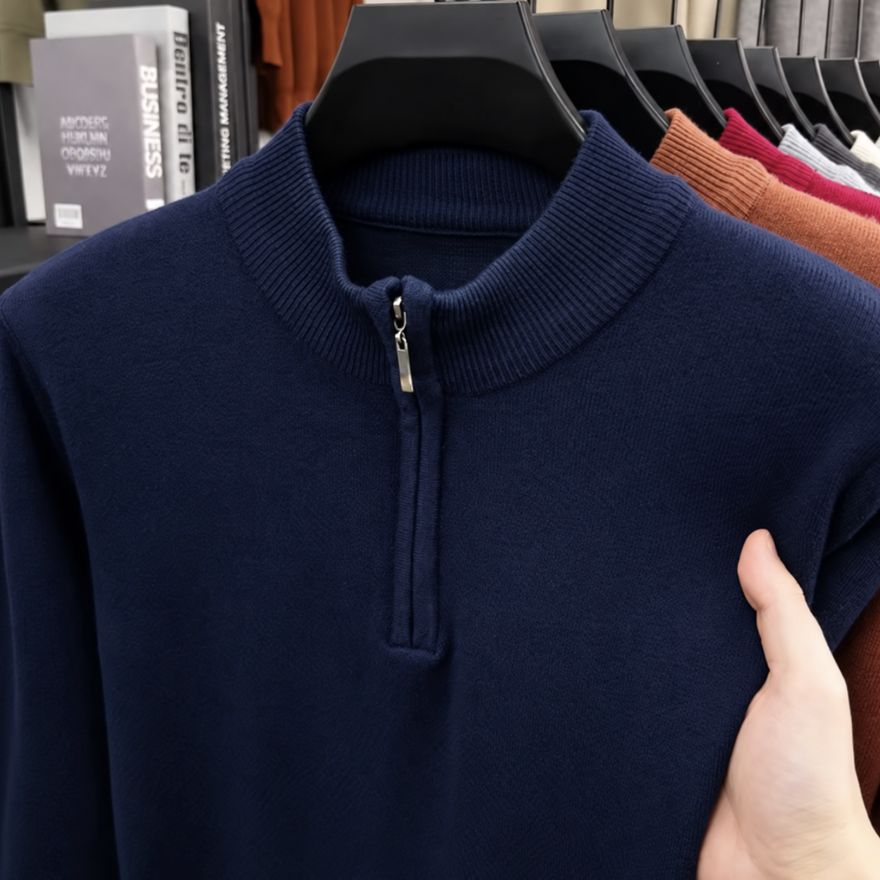
- DescriptionOne line, machine translated
- MaterialMissing
- ColourMissing
- GenderMissing
- Google categoryMissing
- CollectionUncategorised
- PriceCost only
Google commerce launch infrastructure
Turn raw product links into a complete Shopify store — optimized product data, consistent AI imagery, structured feed information and automated Merchant Center preflight. Your first store or your fiftieth.
Built for anyone launching a serious Google-focused store — from a first catalogue to batches of 5,000+ products.
Product demo. Store figures shown are illustrative.
Market, pricing, shipping and returns. Pick an AI model, or create your own with one prompt, and choose a proven store layout.
Paste supplier links or upload your catalog. 200 to 1,000+ products per batch.
Titles, Google titles, descriptions, attributes, collections, pricing, feed data and AI imagery with fidelity checks.
Readiness checks across store, feed and policies before you submit to Merchant Center.
From raw product to storefront
The same product, before and after. This is the work StoreFactory removes — and it is the work that decides whether a catalogue is submittable.
2026 New Autumn Men Casual Slim Fit Half Zip Pullover Knitted Sweater Male Tops Plus Size
Harrison Quarter-Zip Knit
Illustrative example of one product through the Factory.
AI media, with a check on it
One character represents the store and stays the same across the whole catalogue — a primary image per colourway, plus two real detail compositions rather than crops. Then every generated image is compared back to the supplier original.
AI imagery at scale only works if customers receive what you advertised. Every generated image is compared with the supplier product and its description: color, zippers, collars, pockets, buttons, pattern and invented branding.
Generic image generation gives a different model on every product, which is what makes a generated catalogue look generated. StoreFactory picks one character per store before any media exists, and every colourway of every product uses it.
Illustrative example
GMC Guard
Almost nothing is held back by the storefront. It is held back by disagreements — between store price and feed price, between a policy and the settings behind it, between a product and the attributes it claims. StoreFactory finds them in your own data, before Google does.
Point GMC Guard at a catalogue that is already live and already spending. It reads your store and reports what it found — no writes, no migration, nothing to move. For a store with revenue at stake, that is the half of StoreFactory that matters first.
Before you submit, StoreFactory checks business information, shipping and return policies, feed and store price consistency, attributes, categories, URLs and structured data. After launch, GMC Guard keeps running the same checks.
Six categories, run against the store and catalogue StoreFactory built — so it runs before submission, as often as you like, without asking Google anything.
Built around current Merchant Center best practices. Final approval is determined by Google.
After the first store
The store build is where it starts. StoreFactory keeps the history of every batch from the first import, so the modules that read it have something true to read. Two are in early access; two are being built.
Product links to a Google-ready store or batch.
Early accessPreflight before launch, monitoring after — on any store, built here or not.
Early accessWhich categories, batches and clusters are actually working.
In developmentWhat deserves more exposure, kept as a list you work through.
In developmentWhat your next 500 products should be, and why.
In developmentBatch history, launch dates and Google performance, connected per product.
Illustrative example
Weighted toward what is working, with room left to explore.
Illustrative example
First store, fiftieth store
Whether this is store one or store fifty, the build is the same structured process: clean product data, consistent imagery, pricing rules, feed preparation and preflight checks. What changes is what you get out of it.
StoreFactory gives you the structure most first stores are missing.
The same process, repeatable, at a scale a person cannot do by hand.
StoreFactory helps a beginner launch like an operator, and an operator scale like a system.
Before you ask
Everything we do not know yet is marked as not known. On a page with no customers, that is the only trust mechanism worth having.
No. Google makes that call and nobody can promise it. StoreFactory builds to Merchant Center's published best practices and sets up the things that commonly hold a submission back — the review is still yours to pass.
Five hours is the build target the product is designed around, not a stopwatch promise. The questionnaire is your time; the catalogue work is ours and runs mostly unattended; the review at the end is yours again. We will publish real build times as early access runs.
A product source or catalogue, and about twenty minutes for the questionnaire.
Yours. You own the store, the catalogue and the data. StoreFactory builds into it.
They are generated from your source product imagery — the product stays the product. Every generated image is compared with the supplier original on colour, closures, collars, pockets, pattern and invented branding, and anything that differs goes to a human. You review before publish, and what goes live is your call.
We are deciding which sources to support first based on what early access members actually use. Tell us yours when you sign up — it affects the order we build in.
Pricing is not set yet. Early access members see it first and help shape it. There is no card, no trial clock and no commitment at this stage.
In batches, smallest first, so each one gets attention. Joining the list is how you get into a batch — we email you when yours opens, and not for anything else.
Early access opens in batches, smallest first, so each one gets attention.
Early access
Access opens in batches, smallest first, so each one gets proper attention. Leave your email and we’ll tell you when yours is up.